
Table of Contents
How Kids Can Use Sound Buttons to Tell Stories About Their Drawings
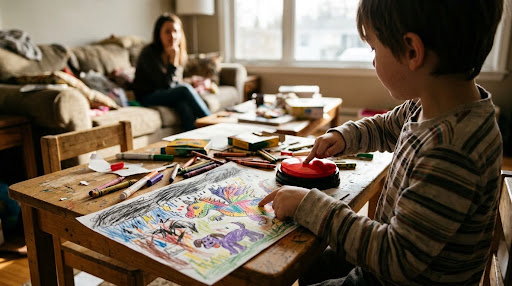
A crayon dragon gets twice as scary the moment it roars. Kids already know this. They make the sounds themselves while they draw, growling, swooshing, and beeping across the page.
Sound buttons turn those noises into a real storytelling tool. One tap plays thunder over a stormy sky or a bark beside a purple dog. Suddenly, the drawing is not just a picture on the fridge. It becomes a story with a beginning, a middle, and a sound-filled ending. With a few simple prompts, any drawing can turn into a short show the whole family enjoys.
Why Do Drawings Make Great Story Starters?
A drawing gives a child something concrete to talk about. Instead of inventing a story from nothing, they point at what they already made. The dog, the house, and the giant sun all become characters and settings. That makes storytelling feel easy, even for shy kids.
Drawing and storytelling also grow together in early childhood. The CDC’s milestones for four-year-olds include telling what comes next in a well-known story and drawing a person with several body parts. Both skills are blooming at the same age. Asking a child to tell the story behind a picture lets them practice both at once.
How Do Sound Buttons Bring a Drawing to Life?
A drawing gives a child something concrete to talk about. As SoundBoardButtons, a free platform where parents and art teachers find sound buttons for kids’ drawing and story time, points out, ‘A crayon picture becomes a story the moment a child presses a sound to show what happens next.’ That one press turns the drawing from a still picture into a moving scene. Kids stop describing what they drew and start telling what happens.
Choosing sounds also makes kids think about order. They have to decide what happens first, what happens next, and how it ends. A child who plays thunder before the sun comes out builds a tiny story arc. That kind of sequencing is a big part of learning to tell stories well.
Which Sounds Fit Common Kids’ Drawings?
Most children draw the same favorite subjects again and again. Matching a few sounds to those subjects makes it easy to narrate every new picture. These four drawing types come up in almost every home:
Animals and Pets
Dogs, cats, cows, and birds are everywhere in kids’ art. A bark, meow, moo, or chirp gives each animal its own voice. Let the child decide how the animal feels, then pick a sound that fits.
Weather and Outdoor Scenes
Big suns, rain clouds, and snowy hills set a picture’s mood. Rain, thunder, or wind sounds tell listeners what kind of day it is. A change in weather can even become the story’s twist.
Vehicles and Busy Streets
Cars, trucks, trains, and rockets almost beg to be heard. A horn, a train whistle, or a countdown adds instant excitement. Kids can tell where the vehicle is going and what happens when it arrives.
Monsters, Dragons, and Silly Creatures
Imaginary creatures give kids the most freedom. A roar, a burp, or a goofy boing can make a monster scary or funny. Ask the child which creature they want before choosing the sound.
How Can Parents Guide a Drawing Story Without Taking Over?
The story should belong to the child, even when an adult helps. Too many suggestions can turn the activity into the parent’s story. Simple, open questions keep the child in charge. These prompts work well for most young storytellers:
- Who is in your picture, and what are they doing?
- What sound would we hear if we were standing right there?
- What happens next after that sound?
- How does the story end?
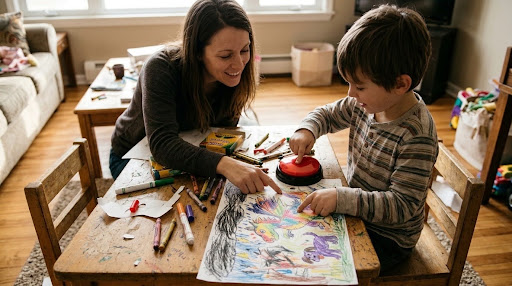
Let the child press the buttons whenever possible. Pressing a sound at the right moment gives them control over the pace of their own story.
How Do You Turn a Drawing Story Into a Little Show?
A finished story feels even better with an audience. Set the drawing on a table or tape it to the wall like a stage backdrop. The child stands beside it, tells the story, and plays each sound at the right moment. Family members can clap at the end like a real audience.
Recording the show adds another layer of fun. A short phone video lets kids watch themselves and share the story with grandparents. Over time, a folder of recorded drawing stories becomes a sweet record of how their imagination and speaking skills grew.
What Mistakes Make Drawing Stories Harder for Kids?
The most common slip is offering too many sounds at once. A long list of buttons turns storytelling into random tapping. Three or four sounds per drawing are plenty for young kids. Pick them together before the story begins.
Correcting the story is another mistake. If the dog flies to the moon, let it fly. Imagination matters more than logic at this age. Keep the volume gentle, too, especially with younger children. Loud sounds can startle little ones and pull attention away from the picture.
Here are a few other blog posts you’re going to love:



Check out our Zentangle course!
Are you trying to find ways to incorporate self-care and creativity into your life? Would you like to introduce the Zentangle Method to your children or students but you’re not sure how?
If you answered yes to any of these questions then you’re going to love our new course. If you haven’t had a chance yet to watch the course overview video, check it out below!
Here are some other activities that you’ll want to check out!:
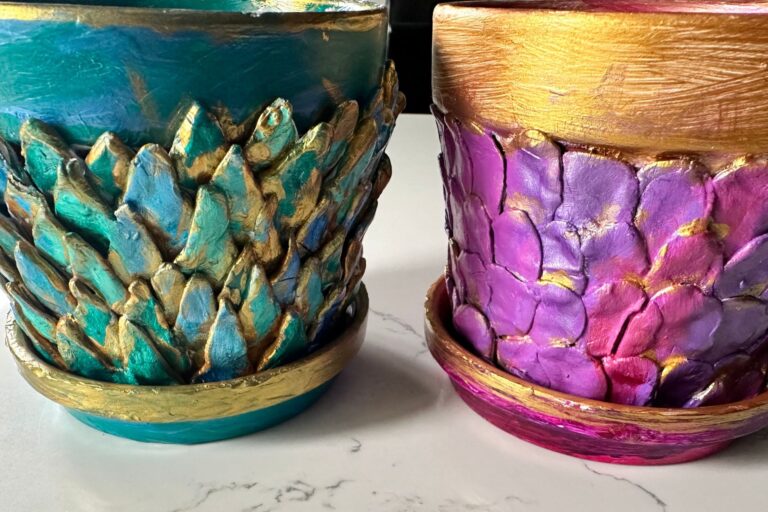
Looking for even more ways to keep your kids engaged? You might be interested in our mermaid terracotta pot craft.
If you love zentangles as much as we do, you’re going to love our zentangle pyramid activity. Click HERE to check it out or click on the images below.

If you’re looking for more activities designed to encourage mindfulness and spark creativity, check out my printable resources below or visit my shop!


Don’t forget to download our free 15 page Mindfulness coloring book to help add a few mindful moments to your child’s day. Just click here or the image below!
